 Notem
Why people switch languages
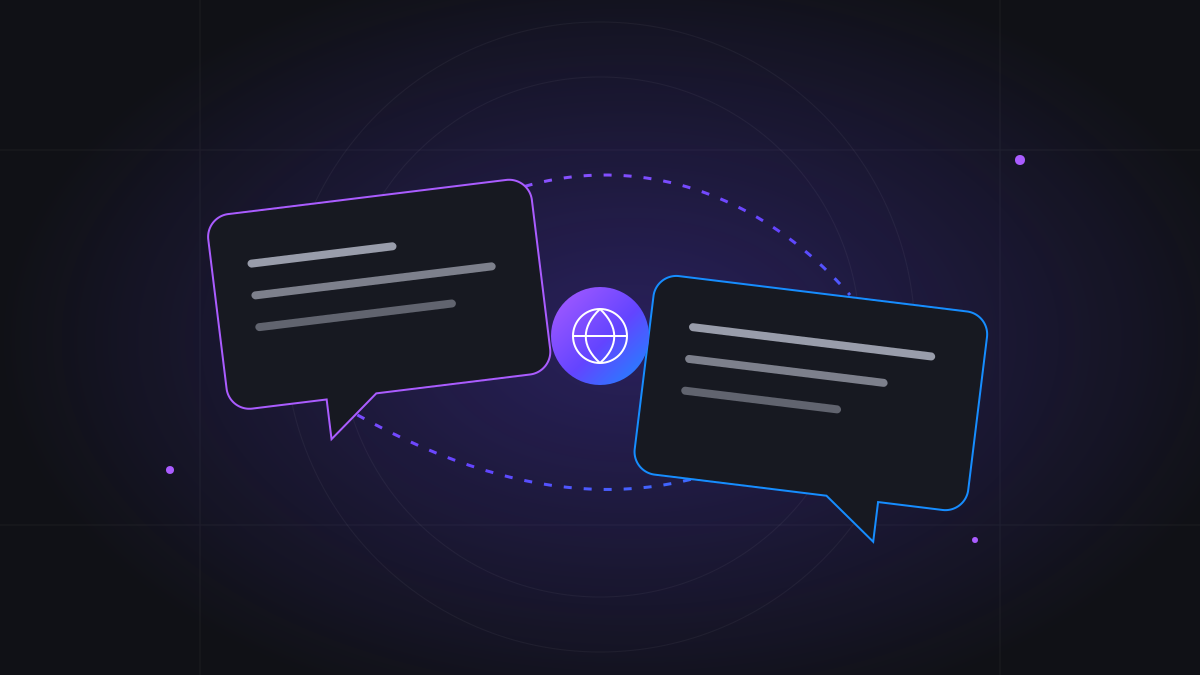
A colleague may explain a technical problem in English, clarify its impact in Urdu, and return to English for the name of a product feature. A student may use one language for the formal concept and another for a question. This is code-switching: changing languages within a conversation, a turn, or even a sentence. It is a normal communication pattern for many multilingual speakers.
The switch often carries useful context. People use a familiar phrase to soften disagreement, explain something precisely, or check that others understand. Requiring everyone to speak a single language can make a discussion less natural. The practical question for an AI notetaker is whether its transcript remains useful when the conversation does not stay inside one language.
A language list does not tell the whole story
Language coverage is a starting point, but a long list does not prove that every combination works equally well. A tool may recognize each language in isolation yet struggle with a short switch, a borrowed word, or names pronounced with a local accent. Ask how it handles mixed-language audio rather than assuming that two supported languages guarantee a perfect mixed transcript.
Notem uses a multilingual transcription provider whose documented language support includes English, Urdu, Hindi, Arabic, and Spanish. Those examples describe coverage, not a benchmark or a promise about every recording. Audio quality, dialect, technical vocabulary, and overlapping speakers still affect the result. Test the way your own team speaks before committing to an ongoing workflow.
What can go wrong in mixed-language speech
Some errors are obvious, such as a word appearing in the wrong script. Others are subtle: a borrowed English acronym becomes an unrelated local-language word, a negation disappears, or a hesitation is interpreted as a firm statement. These are precisely the details that can make a summary misleading even when the overall topic looks correct.
Speaker changes add another challenge. If two people interrupt each other in different languages, the system has to recognize both the words and who said them. Read speaker labels as aids to navigation, and verify attribution when it matters. A fluent-looking sentence is not enough evidence that the correct person made the statement.
Preserve speech before creating a summary
Transcription, transcript cleanup, translation, and summarization are separate jobs. Transcription captures what was said. Cleanup makes that text easier to read. Translation changes the language. Summarization selects and organizes important information. Combining those ideas carelessly can erase the difference between a person's actual words and an interpretation of them.
Notem's transcript refinement is designed to preserve meaning and code-switching while correcting clear punctuation, spacing, and transcription issues. Its instructions keep English as English and present non-Latin speech in readable Roman script. For Urdu and Hindi, the aim is conversational Roman Urdu or Roman Hindi rather than an English translation of the speaker's words.
An Urdu–English example
Consider this illustrative sentence: ‘Mujhe lagta hai this approach is better, lekin humein pehle test karna chahiye.’ It combines Urdu with English and means the speaker prefers an approach while saying it needs testing first. A useful transcript preserves the switch and the condition. A summary can then describe the preference without turning it into a completed decision.
This example shows the intended reading experience, not a measured result from a customer recording. In practice, unfamiliar names, compressed audio, or speech overlap may require review. If the transcript confidently states the wrong term, a polished summary can carry that error forward. Check the original context for any detail that changes a commitment or conclusion.
Readable transcripts make review easier
Raw speech is full of unfinished thoughts, repeated phrases, and corrections. Removing all of those features may make a paragraph smoother while changing what the person meant. Good cleanup improves readability without converting speech into an essay or inventing the end of an uncertain sentence. Meaningful repetition and hesitation can be part of the evidence.
Notem retains speaker and timestamp context as it refines transcript text. That helps you follow the discussion rather than reading an undifferentiated block. The benefit is easier inspection: you can return to the point where a question was asked or a condition was introduced. The transcript still needs human judgment when exact wording matters.
Test the conversations you actually have
Use a short, consented sample that reflects your real meetings. Include ordinary language switches, a few proper names, a technical term, a number, and one unresolved question. Compare the output against what participants intended. A clean monologue in one language is useful for checking microphone setup, but it does not test the multilingual discussion you are trying to capture.
Evaluate the transcript and the notes separately. Did the transcript preserve a negative statement? Did the notes maintain uncertainty? Were speaker labels helpful? Record the kinds of mistakes you encounter rather than judging by whether the summary sounds professional. This gives you a practical basis for comparing tools without inventing an accuracy percentage.
- Test short switches inside a sentence, not only separate language blocks.
- Include the names and vocabulary that matter to your work.
- Check numbers, negations, and conditional statements.
- Look for omitted questions and incorrect speaker attribution.
Use the right notes profile and recording method
A multilingual lecture, hiring interview, and project meeting need different outputs. Notem's student profile focuses on summaries and key concepts, while professional notes can include decisions and action items. Choosing an appropriate profile helps keep the notes relevant without changing how the conversation itself should be represented.
You can capture supported online meetings with the notetaker, record an in-person conversation with Live Notes, or upload an existing recording. In every case, tell participants about recording, capture clear audio, and review important outcomes. A multilingual AI notetaker is most useful when it supports how people already speak and makes checking the result straightforward.
Sources and current product details
Product details checked on October 11, 2026. Provider features and pricing can change; consult the current pages when comparing plans.